
Coffee scrub is just coffee grounds and oil. That is why so many jars turn out gritty, greasy or moldy.
A good coffee body scrub formulation is a balance of grain, oil, structure and preservation, and the coffee is only one part of it. Below: what each ingredient does, how to read the label, why the oil-to-scrub ratio sets the texture, and what to check before you buy or make one.
A coffee body scrub is a rinse-off product made of finely ground coffee, a sugar or salt base and a carrier oil. It suits people who want to buff the skin's surface on the body, not the face. Texture, preservation and patch testing matter more than the coffee itself.
Grind size and the oil-to-scrub balance decide how a coffee scrub feels. Anything containing water needs a proper preservative system, or mold becomes a real risk. Skin reacts differently from person to person, so patch test first and stop if you get redness or stinging.
What actually goes into a coffee body scrub?
Most coffee scrubs combine four parts: ground coffee, a sugar or salt base, a carrier oil, and optional extras such as butters, vitamin E or fragrance. The grounds and base do the buffing. The oil makes the mix spreadable and leaves a softer feel after rinsing.
Coffee grounds: fine grind, dry, and not leftover from the cup
Used grounds from your morning cup are wet. Moisture in a jar is the fastest route to mold, and the spent grounds also carry brewing residue. Dry, purpose-ground coffee behaves more predictably.
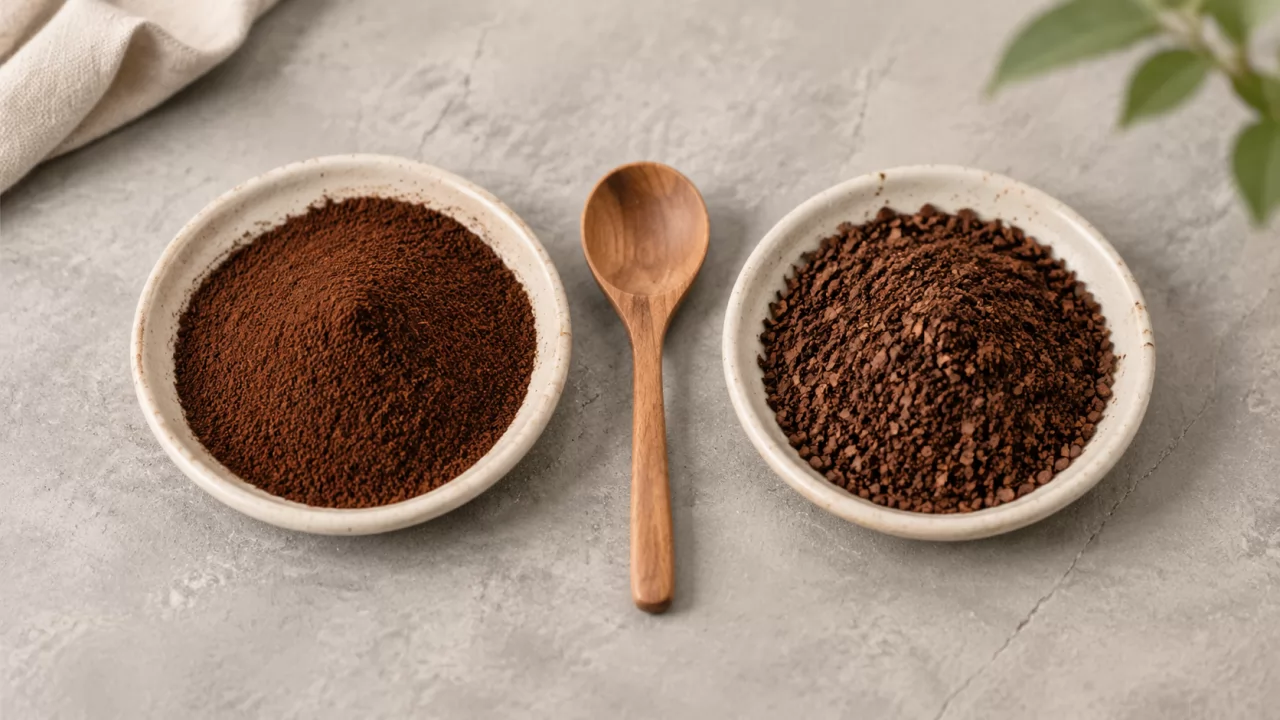
Grind size changes the feel a lot. A fine grind feels softer and more even. A coarse grind has sharp, uneven edges that can scratch, especially on skin that is dry or already irritated. Fine is the gentler choice for most people.
Sugar, salt, and other bases
The base is what gives a scrub its bulk. Sugar and salt are the usual choices, and they behave quite differently once they meet water.
| Criterion | Sugar | Sea salt | Other bases (e.g. ground seeds or shells) |
|---|---|---|---|
| Grain feel | Rounder, softer | Sharper, harder | Varies by material |
| Dissolving in water | Dissolves fairly fast | Dissolves, usually more slowly | Does not dissolve |
| Body use | Common, widely tolerated | Better on tougher skin | Depends on grain size |
| Face use | Only very fine grades | Generally avoided | Generally avoided |
| Stinging on nicks | Less likely | More likely | Varies |
For most body scrubs, sugar is the easier starting point. Salt suits people who like a firmer scrub.
Carrier oils, butters, and fragrance
A carrier oil is a plain plant oil, such as sweet almond, jojoba or sunflower, that carries the other ingredients and spreads them over skin. Butters like shea or cocoa are solid at room temperature, so they thicken the mix and make it feel richer.
Fragrance deserves suspicion. It is one of the most common triggers of skin irritation in scrubs, because the product sits on the skin while you massage it in. Coffee smells good by itself, so a heavily scented coffee scrub is worth a second look.
How to read a coffee scrub ingredients list
Labels in many markets list ingredients by INCI name. INCI stands for International Nomenclature of Cosmetic Ingredients, a standard naming system so the same ingredient has the same name everywhere. Ingredients are generally listed from the highest amount to the lowest, with small amounts at the end.
So a scrub that starts with sugar and an oil is mostly sugar and oil. A long list does not mean a better product. It can just mean more fragrance and colour.
Coffee names you will see on labels
Coffee often appears as Coffea Arabica Seed Powder, meaning ground seeds of the arabica plant. You may also see Coffea Arabica Seed Oil or Coffea Robusta Seed Powder. Powder is the exfoliating part. The oil is an ingredient that adds a feel, not grit.
Red flags worth a second look
Be careful with a jar that lists water (Aqua) but no preservative, with vague words like "natural" in place of a real ingredient list, or with promises about cellulite or detox. A scrub cannot back those claims up.
Why oil-to-sugar ratio decides the texture
Texture comes from the balance of scrub material, oil and structure, not from the coffee. Change the ratio slightly and the same ingredients can give a gritty crumble, a spreadable paste or an oily puddle. This is the point where most home and small-batch recipes go wrong.
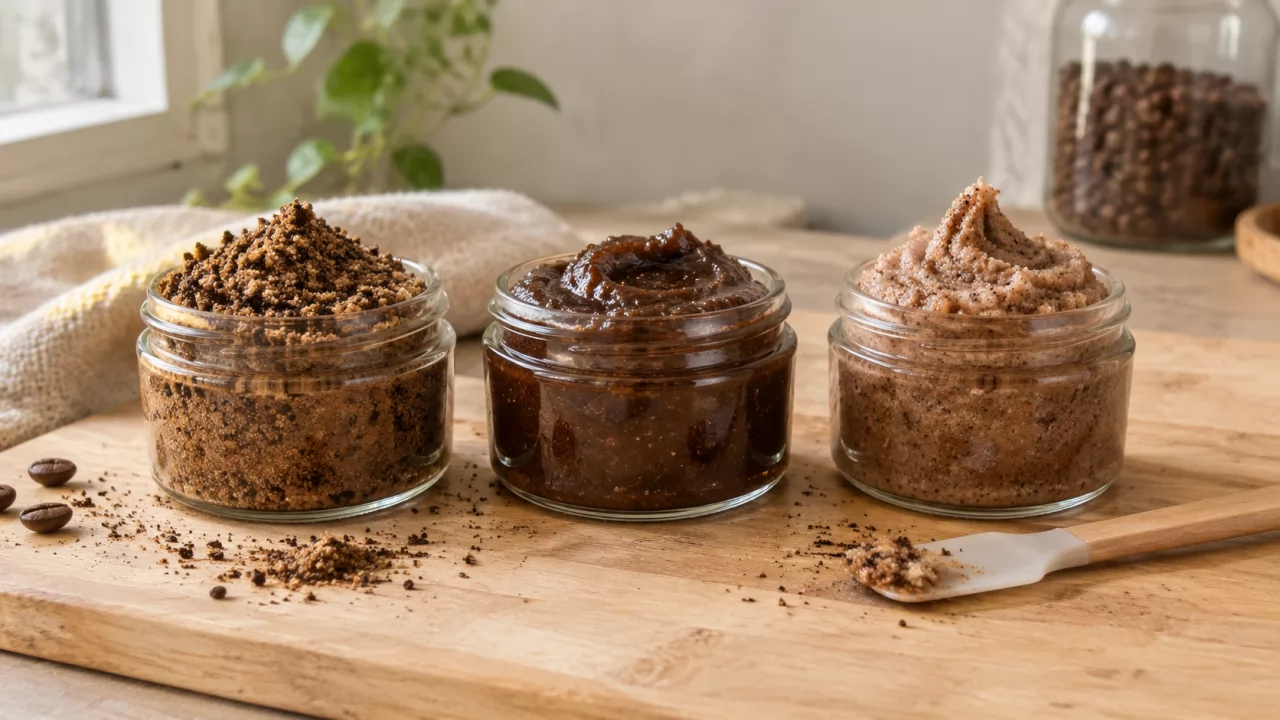
The three textures: dry, paste, and whipped
Scrubs generally fall into three styles. The differences below are typical, not fixed rules.
| Criterion | Dry scrub | Paste scrub | Whipped scrub |
|---|---|---|---|
| Feel | Loose, sandy | Thick, spreadable | Light, fluffy |
| Typical contents | Grounds, sugar, little oil | Grounds, sugar, more oil | Butters, oil, scrub material |
| Rinsing | Rinses easily | Can leave an oily film | Depends on emulsifier |
| Storage | Keep very dry | Cool, closed tub | Cool; can soften in heat |
Paste is the most common style. Dry and whipped versions need more care to keep their shape.
Finding a workable ratio
Scrubs usually contain more scrub material than oil. Beyond that, no single number works everywhere. The right mix depends on grain size, since finer grounds soak up more oil, and on how much butter you use. Climate matters too, because butters soften in warm rooms.
So start small. Make a test batch, rest it overnight, and look at it the next day. Oil often settles or the mix firms up as it sits. Change one thing at a time and write it down.
Fixing common texture problems
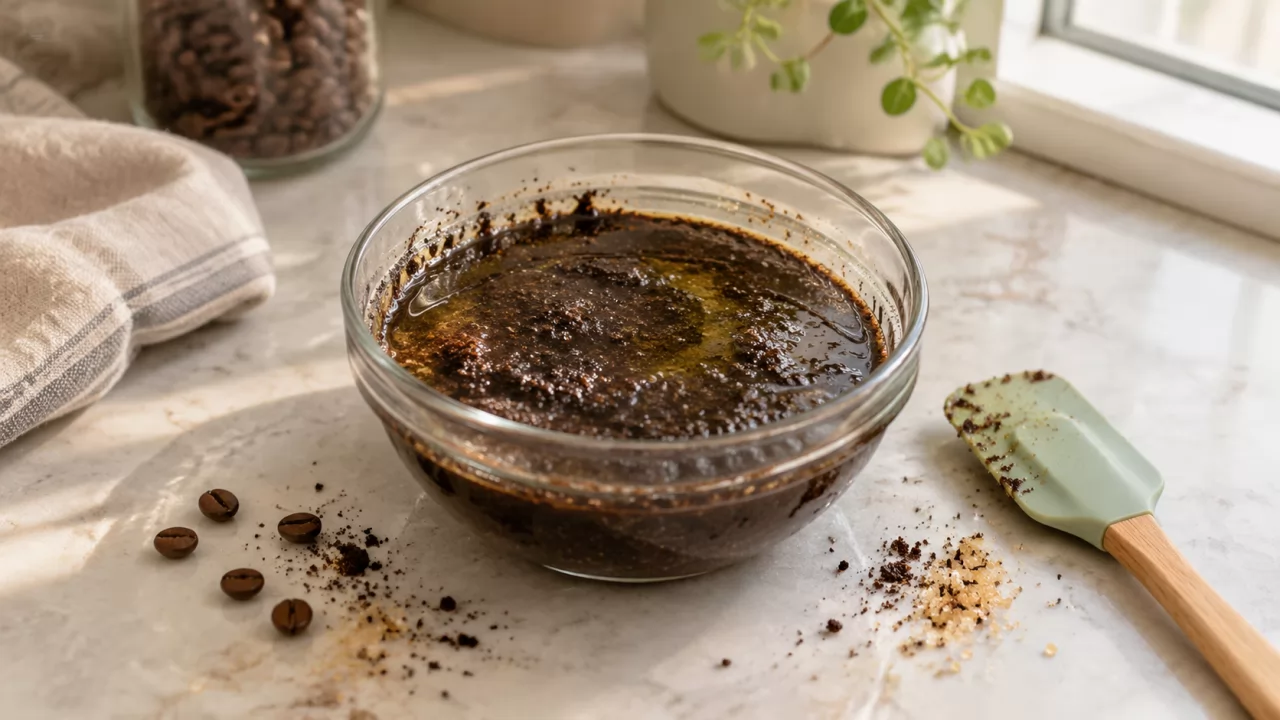
A typical oily puddle means too much oil for the amount of fine grounds. Add more sugar or a little butter and stir.
A typical hard brick usually comes from too much butter, or from a cold room. Warm it gently, or cut the butter in the next batch.
A typical dry crumble means too little oil for the grind. Add oil a few drops at a time, since fine coffee drinks it up slowly.
How an emulsified scrub differs from an oil-based one
An emulsifier is an ingredient that lets oil and water mix and stay mixed. In a scrub, an oil-and-emulsifier blend means the product turns milky when it meets water and rinses off more cleanly, with less greasy film left on skin and on the shower floor.
An oil-only scrub is simpler. It has no water, so mold has less to feed on, but it can feel greasy and does not rinse as easily. An emulsified scrub feels lighter and washes off better, but it is a different kind of product to make.
The catch: adding water, or an ingredient that contains water, changes the shelf life. Water lets bacteria, yeast and mold grow. A water-containing scrub needs a proper preservative system, chosen to suit the formula and tested for stability. Vitamin E is an antioxidant that slows oils going rancid, but it is not a preservative against microbes.
Oil-only is easier to keep safe. Emulsified is nicer to rinse. Neither is better for everyone.
Safety, shelf life and patch testing
Skin reacts differently from person to person, so no scrub can be guaranteed gentle. A patch test is the simplest precaution. Avoid scrubbing broken, sunburned or freshly shaved skin, and take extra care around the face, where skin is thinner.
Oils make shower floors slippery. Rinse the tub well and use a mat.
Storage matters as well. Keep jars closed, use a clean dry scoop instead of wet fingers, and keep water out. Check the label for a period-after-opening symbol or a batch code, and throw out anything that smells sour or shows spots.
To patch test, rub a small amount on the inner forearm, leave it for the time the instructions suggest, then rinse and watch the area for the next day or so. Stop using it if you see redness, itching or swelling.
How to choose a coffee scrub that suits you
- If your skin is dry or easily irritated, then pick a fine grind with a sugar base and a plain oil.
- If you dislike greasy skin after rinsing, then look for an emulsified style, and check it lists a preservative.
- If fragrance bothers you, then choose a product with no added fragrance and let the coffee scent do the work.
- If you shower with wet hands, then a pump or tube is cleaner than an open tub.
- If the label is hard to read or incomplete, then skip it.
Making your own label: how to make coffee body scrub for private label
If you are developing a scrub to sell under your own name, settle three things first: the texture you want, the preservative system, and the stability tests. Stability testing usually means checking how the product holds up in heat, cold and over time. A formulator or a manufacturer can supply samples for you to try. Ask what goes in them and how they were tested before you commit to a design.
Frequently asked questions
Can I use leftover coffee grounds from my morning cup?
It is not a good idea for anything stored. Wet grounds can grow mold within days. If you use them, mix fresh for one shower and rinse it away.
How often can I use a coffee scrub?
Once or twice a week suits many people. Less often if your skin feels tight or looks red.
Does coffee scrub really help with cellulite?
There is no firm evidence that it does. A scrub only buffs the skin's surface, and any change in how skin looks afterwards tends to be brief.
Why does my scrub separate or go hard?
Separation usually means the oil is not held in the mix, which is common without an emulsifier or enough butter. Hardness usually comes from too much butter or from cold storage. Adjust one ingredient at a time.