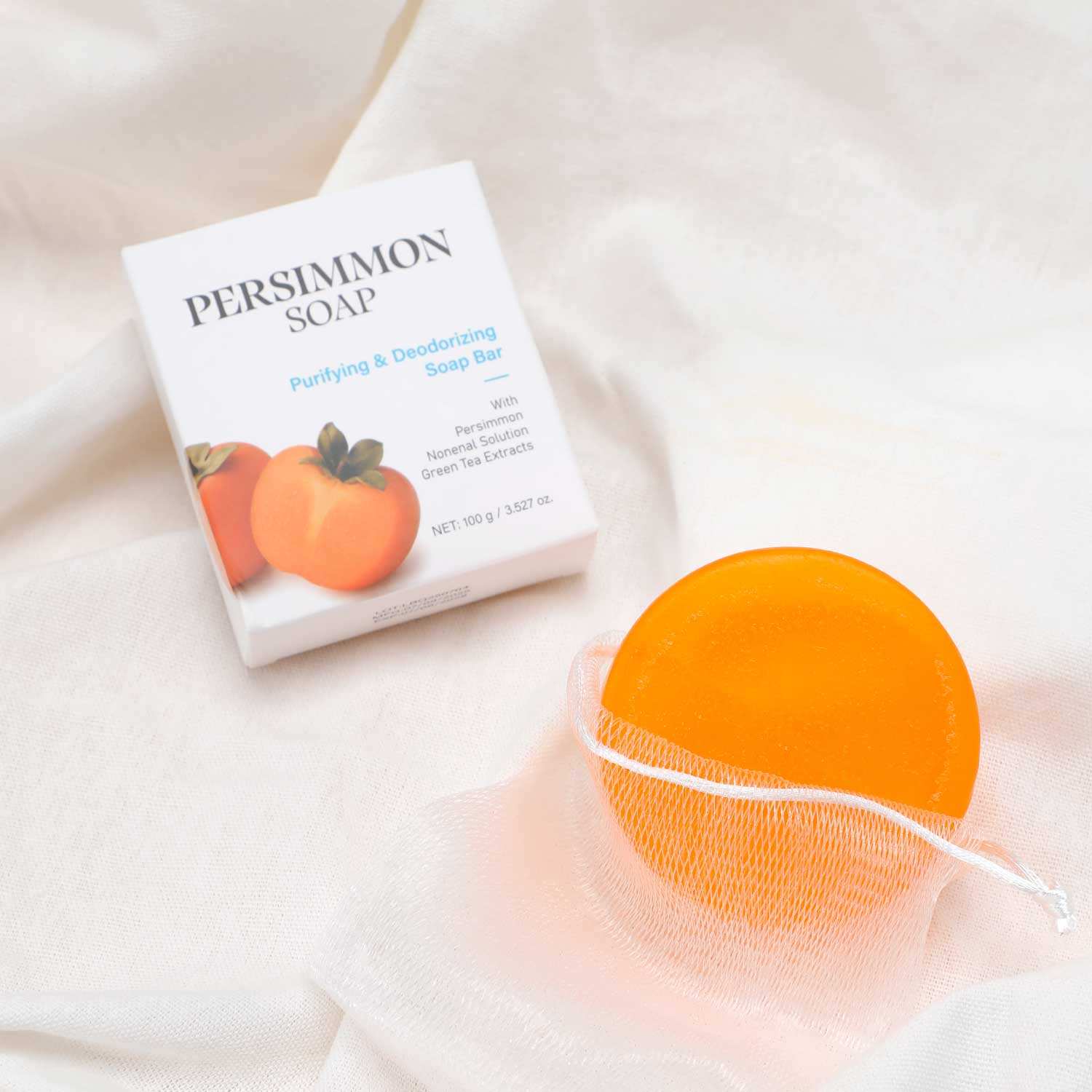

Разбор на основе данных: что на самом деле делает мыло с хурмой, что входит в состав бруска и оправданы ли ожидания.
Если вы в последнее время проводили время в интернете, изучая уход за кожей, то наверняка заметили его: брусок оранжевого оттенка, который обещает решить проблемы жирной кожи, забитых пор и того лёгкого запаха "не совсем свежести", который не смывается полностью ни одним душем. Это мыло с хурмой. И, в отличие от многих вирусных продуктов, за ним стоит реальная история — а не только эффектная маркетинговая кампания.
Давайте разберёмся.
Что на самом деле представляет собой мыло с хурмой?
По сути, мыло с хурмой — это очищающий брусок, изготовленный с использованием какой-либо части плода хурмы. Возможно, экстракта мякоти. Возможно, листьев. Или — что особенно интересно — ферментированного танина хурмы, известного в Японии как shibuol.
Вот о чём умалчивает большинство страниц с описанием продукта: "мыло с хурмой" — это не единый стандартизированный продукт. Два бруска, лежащие рядом, могут иметь совершенно разные формулы. Один может содержать большое количество настоящего ферментированного танина. Другой — глицериновую основу с добавлением фруктовой отдушки и оранжевого красителя. Название одно. Результаты совершенно разные.
Поэтому прежде чем говорить о преимуществах, нужно понять, какой ингредиент выполняет основную работу.
Ингредиент, с которого всё началось: танин хурмы (Shibuol)
Танины — это природные вяжущие соединения; именно они вызывают ощущение сухости и стягивания, знакомое по крепкому чаю или неспелой хурме. В уходе за кожей именно это вяжущее действие имеет решающее значение.
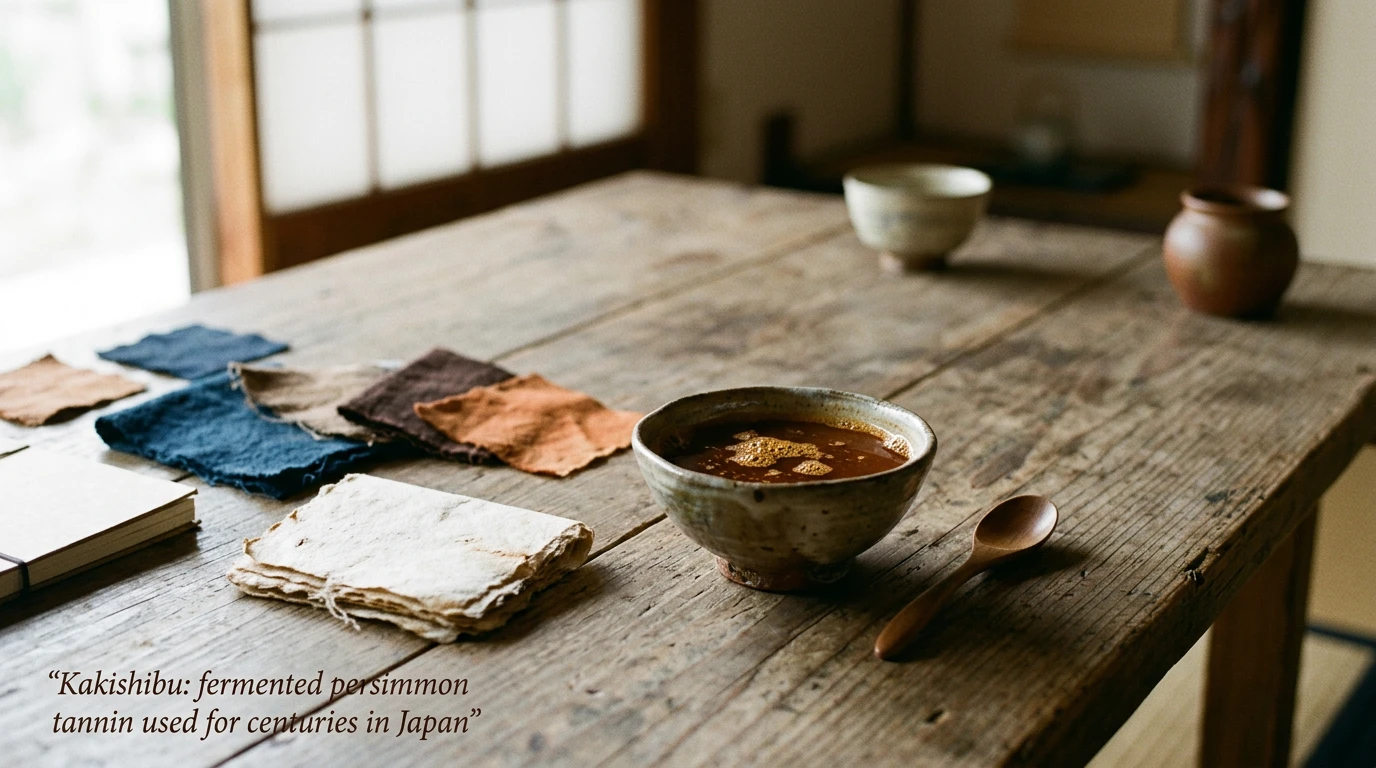
Традиционным источником здесь служит kakishibu — ферментированный сок хурмы, который веками использовался в Японии. Исторические записи свидетельствуют, что его применяли в периоды Хэйан и Эдо: им окрашивали ткани, придавали водостойкость бумаге и защищали древесину. В то время никто не называл его косметическим продуктом. Это была промышленная химия ещё до появления самого термина.
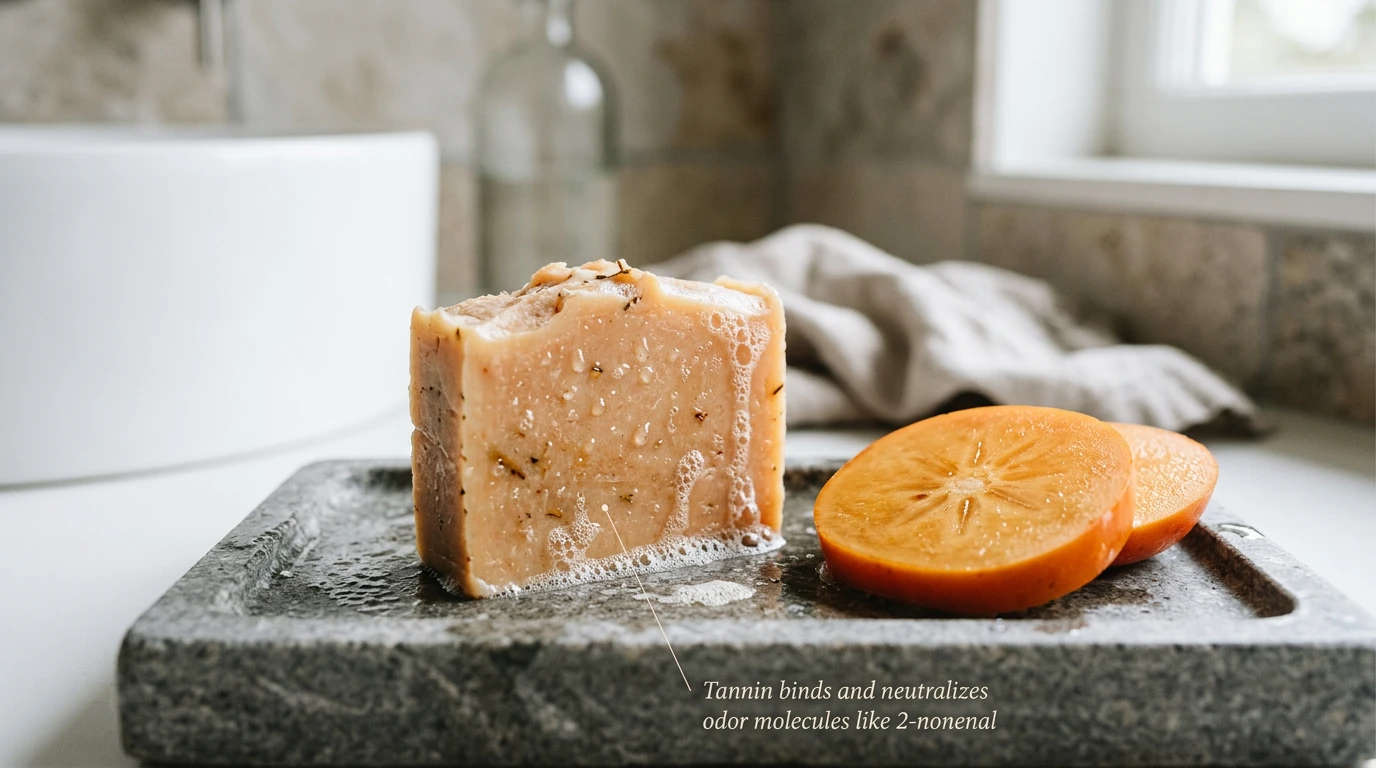
Почему это важно сегодня: танин хурмы связывается с молекулами, вызывающими запах. Именно это свойство отличает действительно эффективное мыло с хурмой от обычного продукта-новинки.
Холодный способ или плавление и заливка: почему метод изготовления меняет свойства мыла
То, как изготовлено мыло, многое говорит о том, что вы получаете.
Мыло из хурмы, изготовленное холодным способом, делают, смешивая масла со щёлочью при низких температурах, а затем выдерживая брусок в течение четырёх — шести недель. Этот метод позволяет сохранить больше растительных активных веществ и точно подобрать соотношение масел и таннинов. Именно такой формат предпочитают специалисты по составлению формул.
Метод плавления и заливки работает иначе. При нём используется готовая мыльная основа, которую расплавляют и смешивают с добавками — это быстрее и дешевле, однако основа часто снижает концентрацию хурмы. Это не обязательно плохо. Просто такое мыло обычно мягче и менее эффективно. Если на этикетке активно подчёркивается "ручная работа", но ничего не говорится о способе изготовления, это небольшой тревожный сигнал, который стоит отметить.
Что на самом деле входит в состав бруска (разбор ингредиентов)
Понимание ингредиентов и применения мыла из хурмы значительно упрощает выбор. Ниже приведён типичный состав качественного бруска и указано, какую функцию выполняет каждый компонент.
| Ингредиент | Роль в составе мыла | На что воздействует |
|---|---|---|
| Таннин хурмы (шибуол) | Вяжущее действие, связывание запахов | Соединения, вызывающие запах тела, избыток кожного сала |
| Витамин C (из мякоти плодов) | Антиоксидант | Тусклый цвет кожи, повреждение свободными радикалами |
| Экстракт листьев хурмы | Успокаивающий, богатый витаминами | Чувствительная/реактивная кожа |
| Растительные масла (оливковое, кокосовое) | Очищающая основа | Баланс влаги |
| Уголь/глина (дополнительные ингредиенты) | Глубокое очищение | Забитые поры |
Почему соотношение танинов и масел — деталь, о которой никто не упоминает
Это та часть, которую, как мне хотелось бы, большее число обзоров освещало бы честно. Брусок с высоким содержанием танинов, но низким содержанием питательных масел будет очищать агрессивно — и оставлять кожу стянутой, иногда даже неприятно скрипучей.
Танины по своей природе обладают вяжущим действием. Если повысить их концентрацию слишком сильно и не сбалансировать её маслами, такими как оливковое или ши, получится брусок, который устраняет запах, но разрушает кожный барьер. Этот компромисс реален.
Практическое правило при покупке: если брусок позиционируется одновременно как средство для интенсивной детоксикации, очищения и глубокого очищения, вероятно, в его составе преобладают танины. Отличный вариант для жирной кожи спины и подмышек. Но не лучший выбор для сухой кожи лица зимой.
Преимущества — в порядке убедительности доказательств
Здесь я буду предельно откровенен, потому что большинство статей этого не делает. Не каждое заявленное преимущество подтверждается в равной степени. Именно честная классификация заслуживает вашего доверия — и именно это показывают фактические данные.
Контроль запаха тела: наиболее убедительное применение
Именно здесь мыло с хурмой от запаха тела действительно оправдывает свою репутацию. Химический механизм прост: танины хурмы связываются с летучими соединениями, вызывающими запах, в первую очередь с 2-nonenal{#3##} — альдегидом, который наиболее тесно связан с "возрастным" запахом тела и затхлым запахом кожи, появляющимся с возрастом.
Вместо того чтобы маскировать запах ароматизаторами, средство на основе танинов хурмы для контроля запаха тела действует за счёт химической нейтрализации самих молекул. Именно это различие в механизме действия объясняет, почему такие средства получили распространение на японском и корейском рынках задолго до того, как о них узнали на Западе. Дезодорирующее мыло какисибу уже много лет является одним из основных товаров в японских аптеках и магазинах бытовой химии; его особенно активно продвигают среди мужчин старше 40 лет.
Из всех заявлений, которые делают об этих брусках, именно это имеет наиболее глубокое традиционное и химическое обоснование.
Баланс жирности и кожа, склонная к акне
Танины обладают вяжущим действием, поэтому кожа становится более подтянутой на ощупь, а поверхностная жирность уменьшается. Именно на этом основана идея натурального мыла с хурмой от акне — мягкого очищения, которое не пересушивает кожу так, как средства для умывания с бензоилпероксидом.
Однако важно сохранять реалистичные ожидания. Это средство не лечит активное кистозное или гормональное акне. Болезненные глубокие высыпания? Брусок мыла не решит эту проблему, и я бы рекомендовал обратиться к дерматологу. Мыло с хурмой наиболее полезно при умеренной жирности кожи и периодически возникающих небольших закупорках пор на комбинированной коже.
Антиоксидантная поддержка и осветление кожи
Мякоть хурмы содержит витамин C, что подтверждает целесообразность использования антиоксидантного мыла с витамином C. Антиоксиданты нейтрализуют свободные радикалы, а со временем это способствует более ровному тону кожи и уменьшает её тусклость.
Оговорка: смываемые средства находятся на коже ограниченное время. Мыло не может обеспечить поступление витамина C так же, как несмываемая сыворотка. Рассматривайте осветление как приятный бонус, а не как основное преимущество.
Для лица и тела: где оно работает лучше всего
Коже тела и коже лица нужно разное. Ищете лучшее мыло с хурмой для лица? Выбирайте формулу с меньшим содержанием танинов и большим содержанием масел — достаточно мягкую для использования без пересушивания нежной кожи лица.
Для тела — особенно для жирной кожи спины, подмышек и стоп — хорошо подходит более концентрированное мыло с танинами и часто оказывается более эффективным. Соответствие формулы конкретной зоне — вот что определяет разницу между "это потрясающе" и "почему у меня шелушится лицо".
Краткий обзор преимуществ
| Преимущество | Степень подтверждённости | Лучше всего подходит для |
|---|---|---|
| Уменьшение запаха тела | Высокая (традиционная и химическая основа) | Всё тело, подмышки |
| Контроль жирности | Средний | Жирная/комбинированная кожа |
| Осветление | Набирающий популярность/ограниченный | Тусклый, неоднородный тон |
| Глубокое увлажнение | Слабый | Не самая сильная сторона |
Почему это сейчас в тренде
Так почему же японская техника консервации, которой уже несколько веков, внезапно повсюду в вашей ленте?
Отчасти это связано с более масштабным переходом к экологичной и чистой косметике. Теперь люди внимательнее изучают составы, а спрос на простые формулы на растительной основе продолжает расти. Интерес к натуральному кусковому мылу стабильно увеличивался в течение 2025 года и в 2026 году, следуя той же волне, которая вывела твердые шампуни и очищающие средства в твердой форме в мейнстрим.
Другой фактор — взаимное влияние J-beauty и K-beauty. Ингредиенты, десятилетиями считавшиеся региональными средствами, вновь открываются западной аудиторией. Поисковые запросы уход за кожей с экстрактом хурмы и натуральное мыло ручной работы стали встречаться чаще по мере усиления этого взаимного влияния. Хурма просто появилась в нужный культурный момент.
Влияние социальных сетей и культуры повторного наполнения
Есть и аспект устойчивого развития. Твердые бруски идеально соответствуют движению за отказ от пластика — никакого флакона, меньше упаковки, а срок их использования дольше, чем у большинства жидких средств. Культура повторного наполнения и ванные комнаты в стиле zero waste вновь сделали кусковое мыло по-настоящему привлекательным, а не просто бюджетной альтернативой.
Добавьте короткие видео с демонстрацией тестов запаха до и после использования — и вы получите продукт, о котором легко рассказывать и который легко продемонстрировать. Это идеальный рецепт вирусного распространения.
Как выбрать и использовать мыло с хурмой
А теперь перейдем к практике. Вот как не потратить деньги впустую на брусок только с ароматизатором, замаскированный под продукт с экстрактом хурмы.
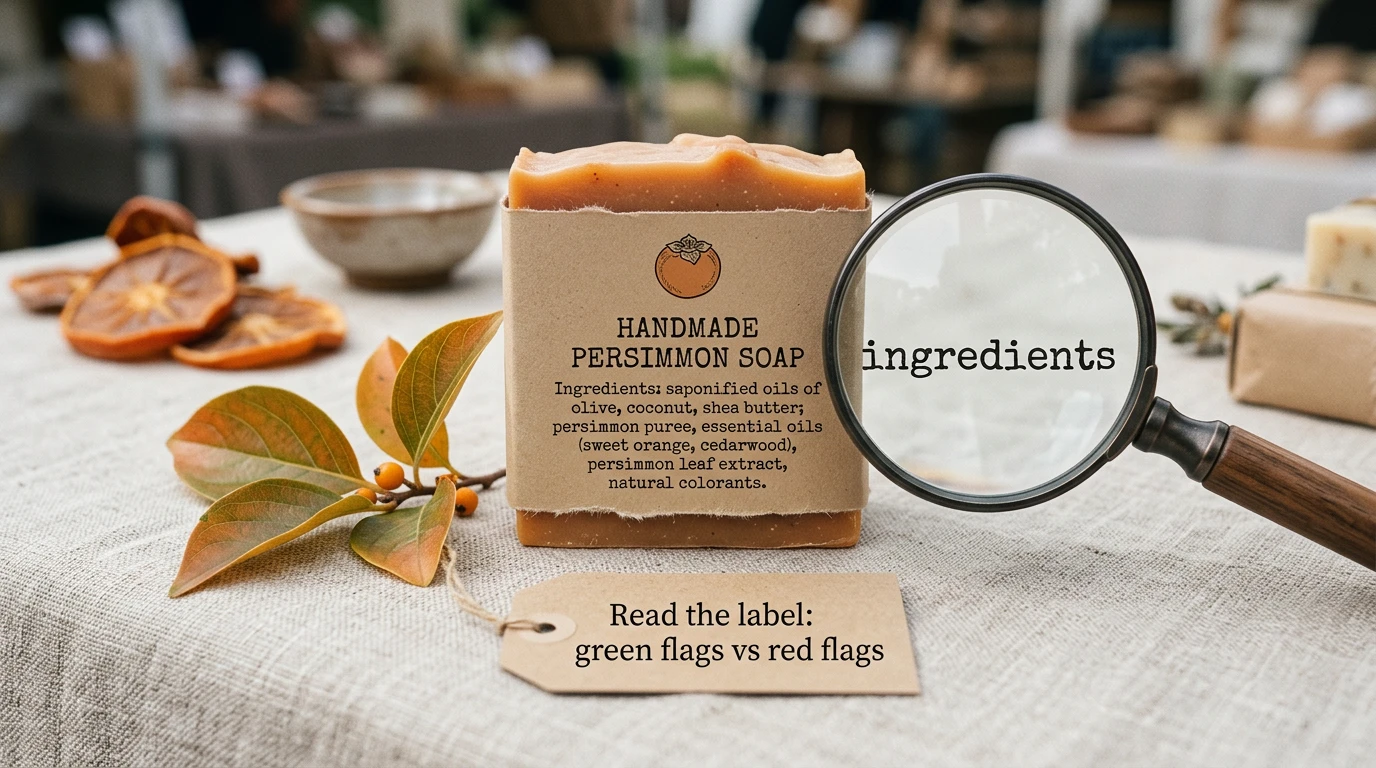
Изучение этикетки: положительные и отрицательные признаки
Положительные признаки:
- Танин хурмы, какисибу или экстракт хурмы указаны в верхней части списка ингредиентов — а не спрятаны в самом конце.
- Указаны конкретные растительные масла (оливковое, кокосовое, ши), а не расплывчатые "очищающие компоненты."
- Есть упоминание о холодном способе производства или традиционной ферментации.
- Сертификаты, которые можно проверить (GMP, ISO, отсутствие тестирования на животных, веганская формула).
Тревожные признаки:
- "Аромат хурмы" без фактического экстракта в списке ингредиентов.
- Состав, в котором преобладают синтетические моющие вещества и красители.
- Громкие заявления об устранении запаха при полном отсутствии упоминания танина — активного компонента, благодаря которому такие заявления выглядят правдоподобно.
Кратко о происхождении: качественные бруски обычно выпускаются производителями, за которыми стоят реальные системы контроля качества. Опытные OEM/ODM-производители — то есть компании, имеющие сертификаты GMP, ISO, FDA и SMETA, — значительно чаще раскрывают сведения о формуле и обеспечивают стабильность партий, чем анонимные объявления о дропшиппинге.
Простой уход (и кому сначала следует провести патч-тест)
Для большинства людей достаточно использовать его на теле один раз в день. При нанесении на лицо начните с применения через день и наблюдайте за реакцией кожи.
Всегда наносите увлажняющее средство после использования. Вяжущий танин означает, что коже необходим этап дополнительного увлажнения, особенно если вы выбрали более сильный брусок.
Очень сухая, склонная к экземе или реактивная кожа? Проведите патч-тест на внутренней стороне предплечья в течение пары дней, прежде чем использовать средство регулярно. Если появляется ощущение стянутости или раздражение, уменьшите частоту применения, а не продолжайте через силу. Это не продукт по принципу "чем больше, тем лучше".
Итог: мыло с хурмой — не чудодейственное средство, но и не пустая реклама. Разберитесь в свойствах танина, подберите формулу с учётом типа кожи и участка тела, который вы обрабатываете, внимательно изучите этикетку — и оно может стать действительно полезным и заслуженно занять место в вашем натуральном уходе.
Часто задаваемые вопросы
В: Действительно ли мыло из хурмы помогает от запаха тела?
О: Да, и это его самое сильное применение. Танин хурмы связывается с вызывающими запах соединениями, такими как ноненаль, нейтрализуя их, а не маскируя парфюмерной отдушкой. Этот механизм имеет долгую историю применения в Японии. Такое мыло не заменит сильный медицинский антиперспирант для людей с обильным потоотделением, но для повседневной свежести этот химический механизм действительно эффективен.
В: Можно ли использовать мыло из хурмы для лица каждый день?
О: С осторожностью. Ежедневное использование для лица имеет смысл только при наличии формулы с более низким содержанием танинов и высоким содержанием масел. Бруски с высокой концентрацией танинов могут чрезмерно высушивать нежную кожу лица при ежедневном применении. Начните с двух или трех раз в неделю, всегда наносите увлажняющее средство после использования и увеличивайте частоту только в том случае, если кожа остается в комфортном состоянии.
В: Безопасно ли мыло из хурмы для чувствительной кожи или кожи, склонной к акне?
О: В целом да. Но если ваша кожа легко реагирует, сначала проведите тест на небольшом участке. При умеренной жирности и периодических небольших закупорках пор мягкое мыло из хурмы может помочь. При активном кистозном или гормональном акне оно в лучшем случае может служить вспомогательным средством — обратитесь к дерматологу, а не полагайтесь только на мыло. Реалистичные ожидания помогут избежать разочарования.
В: Через какое время я увижу результаты?
О: Контроль запаха часто заметен уже после первых нескольких применений, поскольку это непосредственный эффект химического связывания. Баланс жирности обычно нормализуется в течение двух-четырех недель. Осветление, если оно вообще происходит, представляет собой медленное, едва заметное изменение, которое развивается на протяжении нескольких месяцев. Любой, кто обещает преображение за одну ночь, преувеличивает результаты.
В: В чем разница между мылом из хурмы и обычным антибактериальным мылом?
О: Антибактериальное мыло уничтожает или уменьшает количество бактерий на коже, являющихся одним из источников запаха. Мыло из хурмы действует иначе. Оно химически нейтрализует сами молекулы запаха благодаря связыванию танинами и делает это без агрессивных компонентов наподобие триклозана, на которые опираются некоторые антибактериальные бруски. Другой механизм, более мягкий подход и полностью растительная история ингредиентов.