

Я работаю в индустрии средств личной гигиены и ароматов более десяти лет, создавая всё — от масел для тела до спреев для помещений. Но свечи? Именно со свечей началось моё увлечение. Я изготовил тысячи свечей — некоторые получились великолепными, некоторые оказались неудачными — и могу с абсолютной уверенностью сказать: изготовление ароматических свечей дома — один из самых увлекательных DIY-проектов, которые вы когда-либо попробуете.
Позвольте провести вас через весь процесс именно так, как мне хотелось бы, чтобы кто-то объяснил его мне в самый первый день.
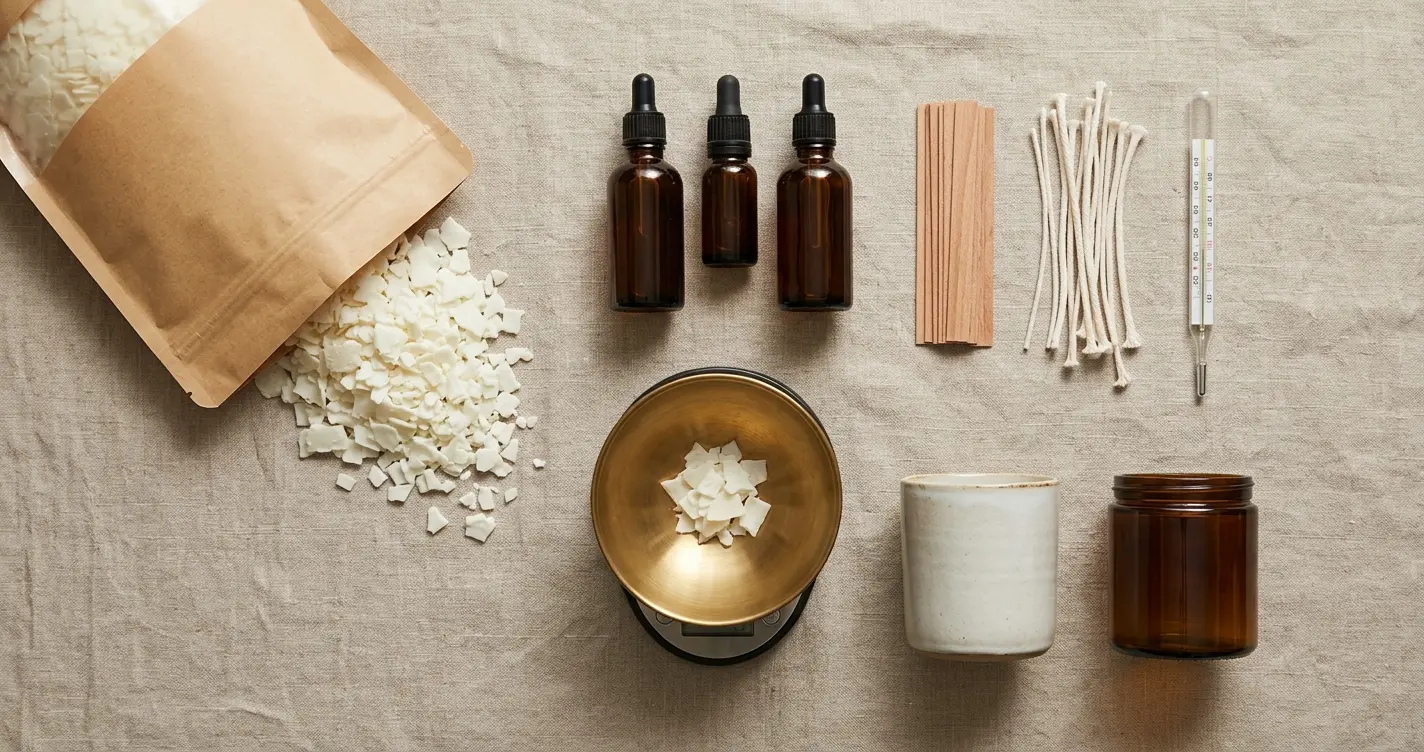
Необходимые материалы для изготовления свечей
Выбор типа воска
Воск — основа всего процесса. Вот что я рекомендую на основе многолетнего опыта и тестирования:
Соевый воск — лучший вариант для начинающих. С ним легко работать, он горит чисто и имеет более низкую температуру плавления соевого воска — обычно от 120°F до 180°F в зависимости от смеси. Это делает его более удобным в работе и снижает риск ожогов при попадании брызг.
Парафиновый воск обеспечивает более интенсивную отдачу аромата и уже десятилетиями остаётся отраслевым стандартом. Он широко доступен и стоит недорого, хотя некоторые потребители предпочитают альтернативы на растительной основе.
Кокосовый воск и его смеси обеспечивают премиальный, кремовый финиш и отлично удерживают аромат. Они стоят дороже, но дают превосходный результат. Пчелиный воск — полностью натуральный вариант с лёгким медовым ароматом, хотя из-за более высокой температуры плавления с ним сложнее работать начинающим.
Судя по тенденциям продаж поставщиков, которые я отслеживал, соевый воск составляет примерно 60% DIY-проектов по изготовлению свечей. Его доступность и репутация материала с чистым горением делают его явным фаворитом среди домашних мастеров.
Выбор аромата — эфирные масла для свечей или ароматические масла
Именно здесь большинство новичков испытывают затруднения, поэтому скажу прямо.
Ароматические масла для свечей специально разработаны для изготовления свечей. Их формулы обеспечивают хорошую эффективность как при горячей отдаче аромата (запах во время горения), так и при холодной отдаче аромата (запах, когда свеча не горит). Доступны сотни вариантов ароматов, и они обеспечивают стабильный результат от партии к партии.
Эфирные масла для свечей привлекают тех, кто хочет полностью натуральный продукт. Они работают, но с оговорками. Многие эфирные масла имеют более низкие точки воспламенения, а это означает, что при высоких температурах они могут разрушаться или становиться небезопасными. Вам потребуется точная дозировка — обычно 6% to 8% ароматической нагрузки — и интенсивность аромата, как правило, будет мягче.
Вот мой отраслевой вывод: большинство профессиональных производителей свечей используют ароматические масла или смеси ароматических и эфирных масел. Свечи только на чистых эфирных маслах — это нишевый продукт, а не стандарт рынка. Для вашего первого проекта я настоятельно рекомендую начать с качественного ароматического масла для свечей.
Стандартная ароматическая нагрузка по типу воска: соевый воск выдерживает 6-10%, парафин допускает до 10-12%, а кокосовые смеси обычно лучше всего работают при 6-8%.
Фитили для DIY-свечей — как выбрать правильный размер
Если есть один фактор, от которого зависит успех свечи, то это фитиль. Неправильный размер приводит к туннелированию (воск остается по краям), образованию нагара в виде «грибка» на кончике или чрезмерной копоти.
Ваши основные варианты: фитили с хлопковым сердечником — это стандарт, и они отлично подходят для соевого воска и парафина. Деревянные фитили создают уютное потрескивание, но требуют большего тестирования. Фитили с цинковым сердечником обеспечивают жесткость и хорошо подходят для контейнерных свечей.
Краткий ориентир по подбору фитилей для DIY-свечей под контейнеры: для банки диаметром 2-3 inch нужен маленький фитиль, для 3-4 inches — средний, а для всего, что больше 4 inches, может потребоваться несколько фитилей или один большой фитиль. Всегда сверяйтесь с таблицей размеров вашего поставщика фитилей.
Моё главное правило: всегда проводите тестовое горение свечи перед изготовлением полной партии. Одна тестовая свеча убережёт вас от того, чтобы испортить двенадцать.
Контейнеры, термометры и другие инструменты
Вам понадобятся термостойкие ёмкости — стеклянные банки mason jars, металлические баночки или керамические контейнеры без трещин. Пароварка или специальный ковш для заливки — обязательны. Термометр (даже обычный термометр для карамели подойдёт идеально) поможет точно выдерживать температуру.
Дополните набор инструментов приспособлениями для центрирования фитиля (или палочками для еды и карандашом), клеевыми точками для фиксации фитилей и инструментом для перемешивания. Это действительно всё, что нужно для начала.
Пошаговый процесс — как сделать ароматические свечи дома
Шаг 1 — Подготовьте рабочее место и контейнеры
Организуйте работу на чистой ровной поверхности. Постелите газету или силиконовый коврик — проливы неизбежны, можете мне поверить. Закрепите фитили на дне каждого контейнера с помощью клеевых точек, плотно прижимая их. Затем установите держатель фитиля или просто положите две палочки для еды поперёк горлышка банки, чтобы фитиль оставался строго по центру.
Шаг 2 — Правильно растопите воск
Используйте метод пароварки. Наполните кастрюлю водой на несколько дюймов, поместите внутрь ковш для заливки или термостойкий кувшин и нагревайте на среднем огне. Целевые температуры: 170-180°F для соевого воска, 180-190°F для парафина.
Никогда не разогревайте воск в микроволновке. Никогда не нагревайте его напрямую над открытым огнём. Оба способа создают опасные перегретые участки и риск возгорания. Аккуратно и периодически помешивайте, чтобы обеспечить равномерное и полное плавление.
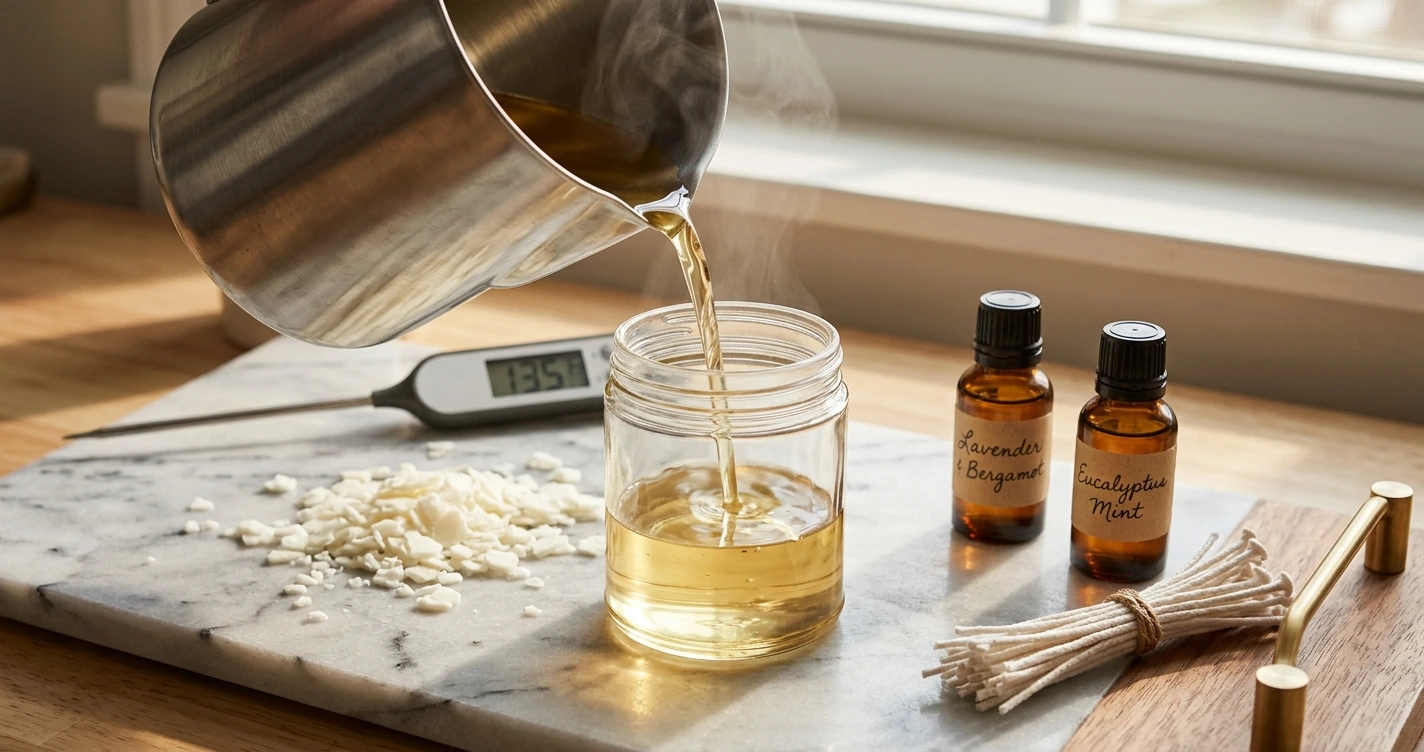
Шаг 3 — Добавьте ароматизатор при правильной температуре
На этом этапе ошибается больше новичков, чем на любом другом. Когда воск полностью растопится, снимите его с огня и дайте остыть до температуры добавления ароматизатора, рекомендованной производителем. Для большинства соевых восков это 135°F to 145°F.
Отмеряйте ароматизатор по весу, а не по объёму. Стандартное соотношение составляет примерно 1 ounce ароматизатора на 1 pound воска при нагрузке 6%. Тщательно перемешивайте в течение полных двух минут — это не обсуждается. Именно перемешивание позволяет молекулам ароматизатора правильно связаться с воском.
Самая распространенная ошибка, которую я вижу? Добавление ароматизатора, когда воск все еще слишком горячий. Все, что выше 185°F, буквально выжигает ваш аромат. Вы зальете свечу, дадите ей отстояться, зажжете ее — и будете удивляться, почему она почти не пахнет. Температурная дисциплина — это главное.
Шаг 4 — Заливка и отверждение
Для соевого воска заливайте при 120-140°F для максимально гладкой поверхности. Заливайте медленно и равномерно, чтобы свести к минимуму пузырьки воздуха. Дайте свечам остыть при комнатной температуре на ровной поверхности — без ускорения в холодильнике. Это вызывает трещины и проблемы с адгезией.
Теперь наступает самое сложное: ожидание. Соевым свечам требуется минимум 48 часов на отверждение. Однако для оптимальной отдачи аромата я рекомендую 1–2 недели. Во время отверждения ароматическое масло полностью связывается с затвердевшим воском. Это значительно улучшает интенсивность аромата, который будет выделяться при горении.
Я знаю, как велико искушение зажечь их сразу. Не поддавайтесь. Разница между 2 днями отверждения и 10 днями отверждения поразительна.
Шаг 5 — Подрезка фитиля, тестирование и устранение проблем
Подрежьте фитиль до 1/4 дюйма перед первым зажиганием. Затем соблюдайте правило первого горения: дайте расплавленному воску дойти до краев емкости, прежде чем тушить свечу. Обычно на это требуется около 1 часа на каждый дюйм диаметра емкости.
Распространенные проблемы и быстрые решения: углубления возле фитиля можно исправить с помощью термофена или второй небольшой заливки. Мокрые пятна (когда воск отходит от стекла) являются косметическим дефектом и не влияют на эксплуатационные характеристики. Иней на соевых свечах — это естественная кристаллизация — на самом деле это признак чистого соевого воска.
Профессиональные советы, на освоение которых у меня ушли годы
Взвешивайте все. Измерение по объему дает непостоянный результат. Кухонные весы полностью изменили мой подход к изготовлению свечей буквально за один день.
Красители в блоках или жидкий краситель: блоки обеспечивают более точный контроль цвета для больших партий; жидкий краситель удобнее для небольших заливок и пастельных оттенков.
Создавайте собственные ароматы. Начните с 70% доминирующей ноты и 30% дополняющей. Ваниль-лаванда — надежный вариант, который обычно нравится большинству, и с него удобно начинать.
Храните ароматические масла герметично закрытыми и вдали от солнечного света. Воздействие УФ-лучей ухудшает их качество в течение нескольких месяцев.
Никогда не оставляйте плавящийся воск без присмотра. У воска есть температура вспышки. Если превысить её, он может загореться. Термометр и ваше присутствие — обязательные инструменты безопасности.
Распространённые ошибки начинающих
Неправильный размер фитиля — это вызывает 80% разочарований у новичков. Всегда проводите тест перед тем, как приступать к полной партии.
Избыточное количество ароматизатора — больше аромата не означает более сильный запах. Превышение рекомендованной дозировки вызывает запотевание (маслянистый налёт на поверхности) и ухудшает качество горения.
Пропуск времени на созревание — незрелая свеча вас разочарует. Терпение окупается лучшей отдачей аромата.
Слишком горячая заливка — приводит к неровной поверхности, трещинам и плохому сцеплению со стеклом. Дайте воску остыть до рекомендованного диапазона.
Отсутствие тестирования перед дарением или продажей — каждая новая комбинация воска, ароматизатора, фитиля и ёмкости требует пробного прожига. Без исключений.
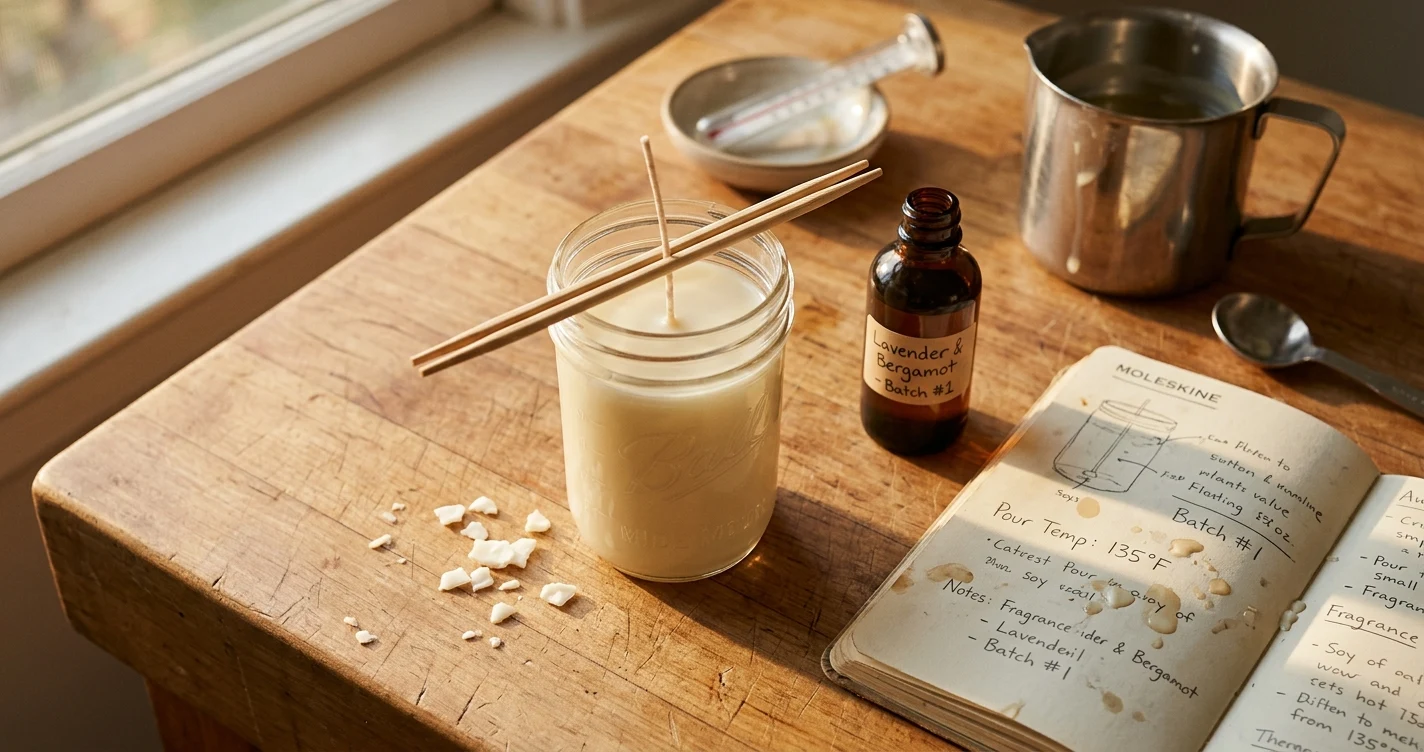
Готовы залить свою первую свечу?
Вот моя рекомендация: начните с простого. Возьмите фунт соевого воска, одно ароматическое масло, которое вам нравится, хлопковые фитили с держателями и несколько банок mason jars. Следуйте шагам выше. Не стремитесь к идеалу — стремитесь к обучению.
Принадлежности для изготовления свечей не должны быть дорогими или сложными. Небольшие партии позволяют экспериментировать без лишнего расхода материалов. Пробуйте разные ароматы, тестируйте разные фитили и делайте заметки по каждой заливке. Этот блокнот станет вашим самым ценным инструментом.
Когда вы уверенно освоите основы, переходите к многослойным свечам, декоративным вставкам или сочетаниям с деревянными фитилями. Творческие возможности здесь практически безграничны.
Сделайте свою первую заливку уже в эти выходные. Возьмите базовый набор материалов, выделите час времени и создайте что-то, что наполнит ваш дом именно тем ароматом, о котором вы мечтали. Вы удивитесь, почему не начали раньше.
Часто задаваемые вопросы
В: Сколько стоит начать делать ароматические свечи?
О: Надежный стартовый набор стоит $40 to $75 и обычно позволяет изготовить 8 to 12 свечей. В него входят воск, ароматизатор, фитили, емкости и базовые инструменты. Стоимость одной свечи значительно снижается уже после первой партии, поскольку многие принадлежности — термометр, кувшин для заливки, держатели фитилей — можно использовать повторно неограниченно долго.
В: Можно ли использовать духи или кулинарные экстракты в качестве ароматизатора для свечей?
О: Я бы не рекомендовал. Духи содержат спирт и другие соединения, не предназначенные для горения — это может создавать опасные проблемы с температурой вспышки, либо аромат просто не будет раскрываться должным образом. Кулинарные экстракты (ваниль, перечная мята) имеют водную основу и не связываются с воском. Используйте ароматические масла для свечей или надлежащим образом подобранные эфирные масла для свечей. Они разработаны так, чтобы быть безопасными и эффективными в горячем воске.
В: Как долго служат домашние ароматические свечи?
О: Стандартная соевая свеча объемом 8-ounce горит примерно 40 to 50 часов. Парафиновые свечи того же размера обычно горят 35 to 45 часов. Более крупные емкости объемом 16-ounce могут гореть 80+ часов. Правильная подрезка фитиля существенно увеличивает время горения.
В: Безопасны ли ароматические свечи для домашних животных?
О: Некоторые ароматы токсичны для домашних животных — особенно для кошек и птиц. Избегайте эвкалипта, масла чайного дерева, цитрусовых масел и перечной мяты рядом с животными. Выбирайте безопасные для питомцев варианты ароматов и всегда используйте свечи в проветриваемых помещениях. Соевый и кокосовый воск образуют меньше сажи, чем парафин, что делает их более щадящими для чувствительной дыхательной системы. Если сомневаетесь, проконсультируйтесь с ветеринаром по поводу конкретных ингредиентов.
В: Могу ли я продавать свечи ручной работы?
О: Да, но делайте это правильно. Вам потребуется тщательное тестирование горения (40+ часов для каждой формулы), маркировка в соответствии с требованиями с указанием веса и предупреждений о безопасности, а также страхование гражданской ответственности. Требования различаются в зависимости от региона. Многие небольшие свечные компании успешно начинают работу из дома — просто заранее вложитесь в тестирование и документацию, прежде чем принимать деньги клиентов.